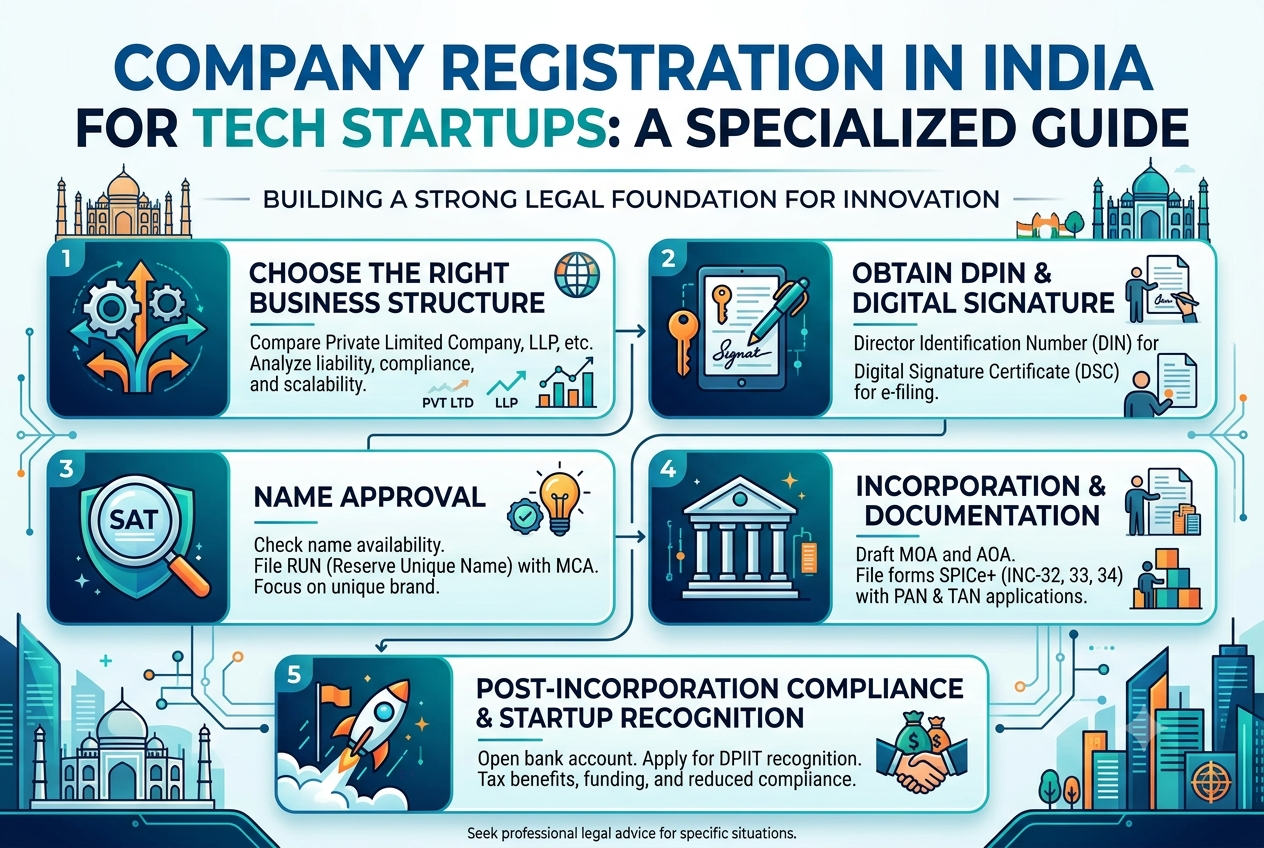
For any tech entrepreneur in India, the journey from a garage-based prototype to a scalable enterprise is paved with both innovation and bureaucracy. As you transition from market validation to building a formal entity, understanding the landscape of company registration in India is your first critical milestone. A well-structured legal foundation not only protects your personal assets but also serves as the bedrock for raising venture capital, attracting top-tier talent, and accessing government-backed incentives.
Why Structure Matters for Tech Startups
While many founders begin as sole proprietors to test their ideas, the limitations of that structure quickly become apparent when you need to scale. For tech startups, the Private Limited Company (Pvt Ltd) is almost universally the preferred vehicle.
Why? Because it provides a clear distinction between the business and its owners. This separation creates a “corporate veil” that shields your personal assets from business liabilities—an essential safeguard in the high-risk tech industry. Furthermore, investors—ranging from angel syndicates to institutional venture capital firms—almost exclusively invest in Private Limited Companies because they allow for the easy issuance of equity, employee stock option plans (ESOPs), and clean governance structures.
The Roadmap to Incorporating Your Business
When you are ready to register a new company in India, the Ministry of Corporate Affairs (MCA) has streamlined the process through the SPICe+ (Simplified Proforma for Incorporating Company Electronically Plus) form. This integrated approach allows you to handle multiple registrations in a single digital workflow.
1. Digital Foundation: DSC and DIN
Before filing, every proposed director must secure a Digital Signature Certificate (DSC). This is a secure, electronic format of your signature used to sign digital documents. Simultaneously, each director will be allotted a Director Identification Number (DIN). These are mandatory prerequisites for any director of a company in India.
2. Name Reservation
Your company name is your brand identity. Use the MCA’s naming services to ensure your chosen name is unique and does not infringe upon existing trademarks. A rejected name can delay your timeline by several days, so it is wise to have a shortlist of three options ready.
3. Filing the SPICe+ Form
The SPICe+ form is the heart of the incorporation process. Through this portal, you will submit:
- Memorandum of Association (MoA) & Articles of Association (AoA): These documents define your company’s scope of activities and internal management rules.
- Proof of Office: A utility bill or a No Objection Certificate (NOC) from your property owner is required to establish your registered office address.
- PAN and TAN: These tax identifiers are generated automatically as part of the incorporation process, saving you weeks of separate applications.
Once your filing is verified by the Registrar of Companies (RoC), you will receive your Certificate of Incorporation (CoI), which bears your Corporate Identity Number (CIN). This certificate is the official “birth certificate” of your business.
Unlocking Government Benefits: The Startup India Initiative
Once your company is legally registered, your next priority should be applying for recognition under the Startup India initiative through the Department for Promotion of Industry and Internal Trade (DPIIT). This is not just a badge of honor; it is a strategic business asset.
DPIIT-recognized startups gain access to several powerful benefits:
- Tax Exemptions: Under Section 80-IAC, eligible startups can claim a 100% tax holiday on profits for three consecutive years out of the first ten.
- Angel Tax Relief: Recognition provides an exemption from the angel tax provisions, making it significantly easier to raise funds from domestic investors at valuations that reflect your growth potential.
- Fast-Track IP Protection: If your startup relies on proprietary algorithms or unique software, you can benefit from expedited patent and trademark examination, often with significantly reduced filing fees.
- Self-Certification: Startups are permitted to self-certify compliance with various labor and environmental laws, drastically reducing the burden of regulatory inspections in your early years.
Post-Registration Compliance: Keeping the Engine Running
Incorporation is the start of your journey, not the end. To keep your company in good standing, you must adhere to a strict compliance calendar. This includes:
- Appointing a Statutory Auditor: You must appoint an auditor within 30 days of your first Annual General Meeting (AGM).
- Filing for Commencement of Business: You are required to file the INC-20A form within 180 days of incorporation to declare that you have initiated business operations and received your initial paid-up capital.
- Annual Filings: Every year, your company must file financial statements (AOC-4) and annual returns (MGT-7) with the MCA.
Final Thoughts for Founders
The regulatory environment for tech startups in India is increasingly favorable, provided you approach it with preparation and expert guidance. Whether you are building the next SaaS platform, an AI tool, or a consumer-tech giant, the effort you put into the initial registration will pay dividends in credibility and operational ease.
By choosing the right structure and proactively leveraging government initiatives, you transform your startup from a fleeting idea into a permanent, scalable entity capable of changing the industry. The path is well-marked—take the steps to formalize your vision today.