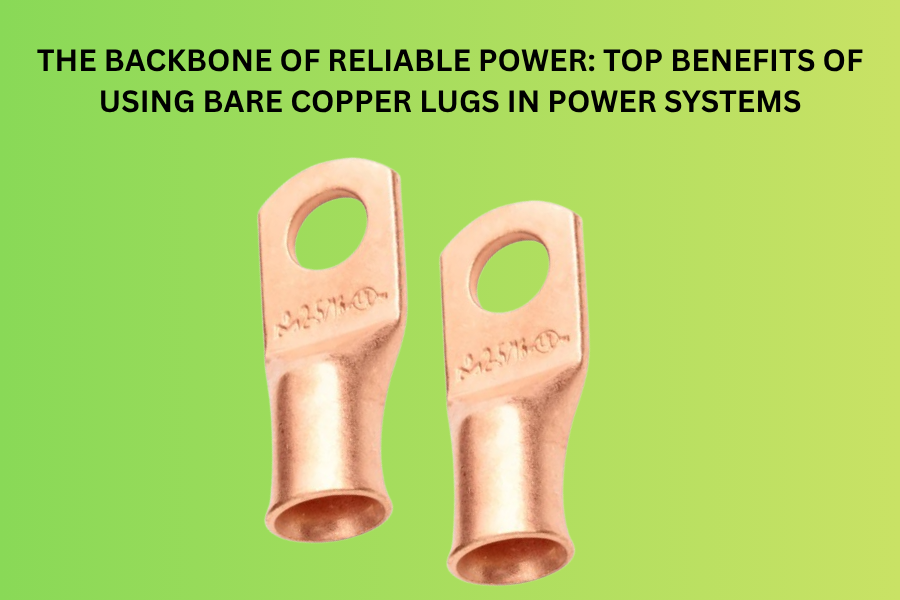
In the world of electrical engineering and power distribution, the integrity of a system is only as strong as its weakest connection. When managing high-voltage networks, industrial machinery, or renewable energy grids, choosing the right components to join cables and equipment is a critical safety and performance decision. Among the various options available, Bare Copper Lugs have established themselves as the industry standard for high-performance applications.
Often integrated as Heavy Duty Wire Lugs in demanding environments, these unplated components offer a suite of mechanical and electrical advantages. This article explores the top benefits of utilizing Bare copper lugs in power systems and why they remain the preferred choice for engineers worldwide.
Unmatched Electrical Conductivity
The primary objective of any electrical connector is to facilitate the flow of current with minimal resistance. Copper is globally renowned for its exceptional electrical conductivity, second only to silver.
When you utilize bare copper lugs, you are using the metal in its purest, most conductive form without the intentional interface of a secondary plating material like tin or nickel.
- Minimal Voltage Drop: Low resistance ensures that voltage drops across connections are kept to an absolute minimum.
- Energy Efficiency: By reducing resistance, bare copper minimizes energy loss in the form of dissipated heat, optimizing the overall efficiency of the power system.
In massive industrial grids where megawatts of power are constantly moving, even a fractional percentage increase in conductivity translates to significant energy and cost savings over time.
Superior Thermal Performance
Power systems inherently generate heat, especially under heavy loads or during transient surge events. Heavy Duty Wire Lugs made from bare copper excel at managing these thermal demands.
Copper possesses a high thermal conductivity, meaning it can absorb and dissipate heat much faster than alternative metals like aluminum.
Why Thermal Management Matters: When an electrical connection overheats, the metal expands. Continuous heating and cooling cycles can lead to thermal expansion mismatch, loosening the crimp or bolt connection over time. This loosening increases resistance, creating a dangerous feedback loop known as thermal runaway.
Bare copper lugs mitigate this risk by maintaining thermal stability, ensuring that the joint remains tight and secure even under fluctuating thermal loads.
Excellent Mechanical Strength and Malleability
Electrical connections must withstand physical stress, including vibrations from heavy machinery, structural settling, and the physical pulling forces exerted during installation.
[High Tensile Strength] + [High Malleability] = Secure, Air-Tight Crimp
Bare copper strikes the perfect balance between strength and malleability:
- Secure Crimping: It is soft enough to be cold-formed or crimped tightly around stranded conductors, creating a near-homogeneous joint. This ensures an air-tight (“gas-tight”) connection that prevents oxygen and moisture from entering the barrel.
- Resilience: It is strong enough to resist cracking, shearing, or deforming under high torque when bolted to busbars or terminal blocks.
Galvanic Compatibility in Copper-to-Copper Systems
One of the hidden dangers in electrical design is galvanic corrosion. This occurs when two dissimilar metals (such as aluminum and copper) come into contact in the presence of an electrolyte (like moisture), causing one of the metals to corrode rapidly.
Because the vast majority of high-performance power cables utilize copper conductors, using Bare Copper Lugs ensures perfect material continuity.
- Eliminates Dissimilar Metal Risks: Connecting a copper wire to a bare copper lug eliminates the galvanic voltage potential at the joint.
- Long-Term Reliability: Without the threat of localized galvanic corrosion eating away at the connection, the system’s lifespan is dramatically extended, reducing the need for frequent maintenance inspections.
Cost-Effectiveness and Longevity
While plated alternatives (such as tin-plated copper lugs) are necessary for highly corrosive or marine environments, they come at a premium. For standard indoor installations, dry environments, or sealed electrical enclosures, bare copper lugs offer a highly cost-effective solution.
- Lower Initial Cost: Eliminating the electroplating manufacturing step reduces the production cost, a saving that is passed on to the consumer or contractor.
- Reduced Maintenance: Thanks to their mechanical robustness and high thermal tolerance, bare copper joints rarely fail when properly installed. The reduction in downtime and emergency repair costs far outweighs any minor maintenance required to manage surface oxidation.
Ease of Inspection and Installation
When working with Heavy Duty Wire Lugs, field technicians need to work quickly and confidently. Bare copper lugs are straightforward to install using standard hydraulic or mechanical crimping tools.
Furthermore, diagnosing the health of a bare copper connection is visually intuitive. Unlike insulated or heavily shrouded alternatives, a bare copper lug allows for easy visual inspection during routine maintenance. Technicians can quickly spot signs of extreme overheating (which alters the color of the copper to a deep purple or black) or physical deformation without needing to strip away layers of plating or insulation.
Managing Surface Oxidation: A Quick Note
A common question regarding bare copper is its tendency to develop a green or brown patina over time due to atmospheric oxidation. It is important to distinguish this superficial oxidation from destructive corrosion.
The thin oxide layer that forms on bare copper is actually self-limiting and protects the underlying metal from further degradation. In standard environments, this does not affect the internal gas-tight crimp zone. For the contact surface mating with a busbar, a quick brush with a wire wheel and the application of a quality anti-oxidant joint compound is all it takes to ensure a flawless, lifetime connection.
Summary of Advantages
| Feature | Bare Copper Lugs | Alternative Materials (e.g., Aluminum) |
|---|---|---|
| Electrical Conductivity | Extremely High (~100% IACS) | Moderate (~61% IACS) |
| Thermal Dissipation | Superior | Average |
| Crimp Reliability | Excellent (Gas-tight finish) | Prone to cold flow / loosening |
| Galvanic Risk | Zero (when used with copper wire) | High (requires bi-metallic transitions) |
Conclusion
In the architecture of modern power systems, every component matters. Bare Copper Lugs provide an unmatched combination of electrical efficiency, thermal resilience, and mechanical durability. By opting for high-quality Heavy Duty Wire Lugs crafted from pure copper, engineers and contractors safeguard their infrastructure against power losses, thermal failures, and costly downtime. When reliability cannot be compromised, bare copper remains the gold standard.