A lug doesn’t fail all at once. It fails slowly, quietly, usually right up until the moment it doesn’t. Catching the warning signs on a 1 awg cable lug before it lets go saves a lot more than a replacement part.
Most techs check the obvious stuff and move on. The real damage often hides in spots people don’t think to look.
Discoloration Tells a Story
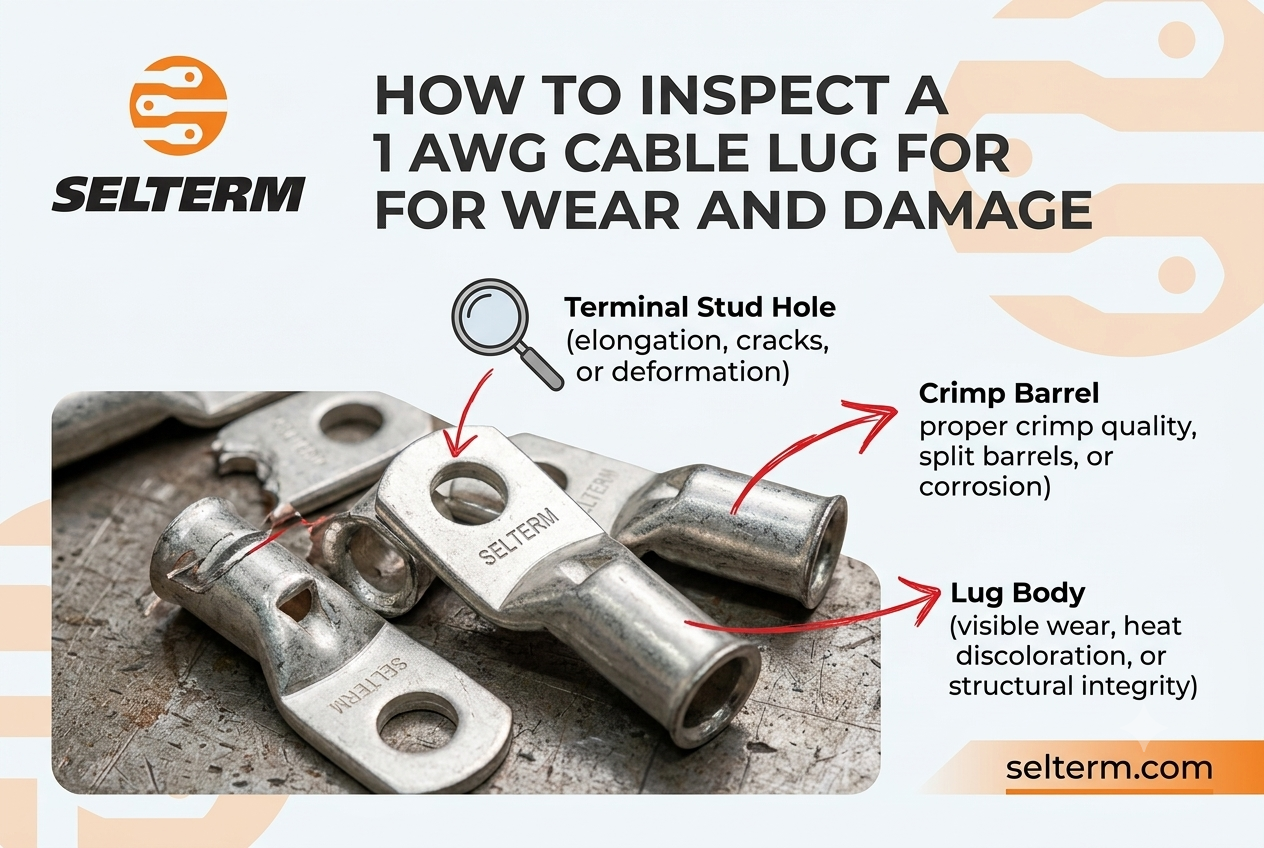
A lug that’s shifted color, especially toward blue or brown near the barrel, has been running hot.
That heat discoloration doesn’t happen from nothing. It’s a sign of resistance somewhere in the connection, usually from a loose crimp or corrosion building underneath the surface.
Catch it early and a simple recrimp might fix things. Catch it late and the strands underneath have likely already started degrading, which means the whole lug needs replacing rather than just reseating.
Green Buildup Means Trouble’s Already Started
Corrosion on a 1 awg terminal lug shows up as green or white crust around the barrel edge or stud area.
By the time it’s visible, it’s already been eating away at conductivity for a while.
- Green crust signals active copper oxidation
- White powder often means aluminum corrosion nearby
- Corrosion under heat shrink is worse, since it’s hidden
- Salt exposure accelerates the whole process fast
Cutting into a corroded barrel usually reveals strands that look nothing like the clean copper that went in originally.
Check the Crimp, Not Just the Connection
A lug can look fine on the outside and still have a crimp that is never fully seated.
Give the barrel a firm twist and a pull test if there’s any doubt. A properly crimped 1 awg cable lug shouldn’t move, shift, or rotate on the cable at all.
Fumbled a hammer-on once on a job that felt rushed, strands sheared right off inside the barrel where nobody could see it happen. It looked perfectly fine from outside. Pulled loose the second real tension hit it.
Cracked or Split Heat Shrink Is a Red Flag
Heat shrink that’s cracked, split, or lifted at the edges has stopped doing its job.
Once that seal breaks, moisture works its way in, and corrosion starts building right where nobody’s watching for it.
- Cracked shrink near the barrel edge lets moisture creep in
- Lifted adhesive at the seam means the seal failed
- Discolored or brittle shrink signals heat exposure over time
- Missing shrink altogether on an outdoor install is asking for trouble
Replacing failed heat shrink is cheap insurance against a much bigger problem down the line.
Stud Hole Wear and Elongation
Repeated tightening and loosening on the same stud connection can slowly wear the hole out of round.
An elongated stud hole on a 1 awg terminal lug means the connection can shift under vibration, even with the nut torqued down properly.
This shows up more on high-vibration installs, engine bays, off-road trucks, boats pounding through chop. Check for oval-shaped wear rather than a clean round hole, and swap the lug if it’s noticeably deformed.
Strand Damage Inside the Barrel
Pulling a lug off to inspect it reveals things a visual check from outside never will.
Cut strands, crushed strands, or strands that have pulled partway out of the crimp all point to a bad initial install rather than gradual wear.
Truth? This kind of damage usually traces back to wrong die selection or a rushed strip length measurement from day one. If it’s happening across multiple lugs on the same build, the problem is the process, not bad luck on individual parts.
Vibration Cracking at the Barrel Neck
The transition point where the barrel meets the flat lug body takes constant stress on mobile applications.
Over time, metal fatigue can create hairline cracks right at that junction, especially on setups with constant engine or road vibration.
These cracks are easy to miss without close inspection, sometimes needing a flashlight at an angle to catch the light right. Any visible crack at this stress point means immediate replacement, no exceptions, since it’s only getting worse from there.
When Replacement Beats Repair
Not every worn lug needs tossing, but some situations don’t leave room for judgment calls.
Any corrosion that’s reached the strands themselves, any cracked barrel neck, any stud hole worn oval, replace it outright rather than trying to salvage the part.
- Corrosion visible inside the barrel after removal
- Any crack at the barrel-to-body junction
- Stud hole elongated beyond round
- Heat discoloration paired with a loose crimp
A new lug and fresh heat shrink cost far less than a comeback call after a connection fails in the field.
Building a Habit Around Inspection
Regular checks on critical connections, especially ones exposed to vibration or moisture, catch problems while they’re still cheap fixes.
A quick visual and pull test during routine maintenance takes a couple minutes per connection. Waiting for a failure to force the issue costs a lot more, in downtime if nothing else.
Last Word From the Bench
Wear on a 1 awg cable lug rarely shows up as one obvious sign. It’s discoloration here, a little corrosion there, a crimp that doesn’t quite feel right when tested.
Building the habit of checking all of it, barrel, stud hole, heat shrink, strand condition, catches failures before they happen instead of after.
A 1 awg terminal lug that passes every check keeps doing its job quietly, which is exactly what a good connection should do.
Catch it early, skip the failure.