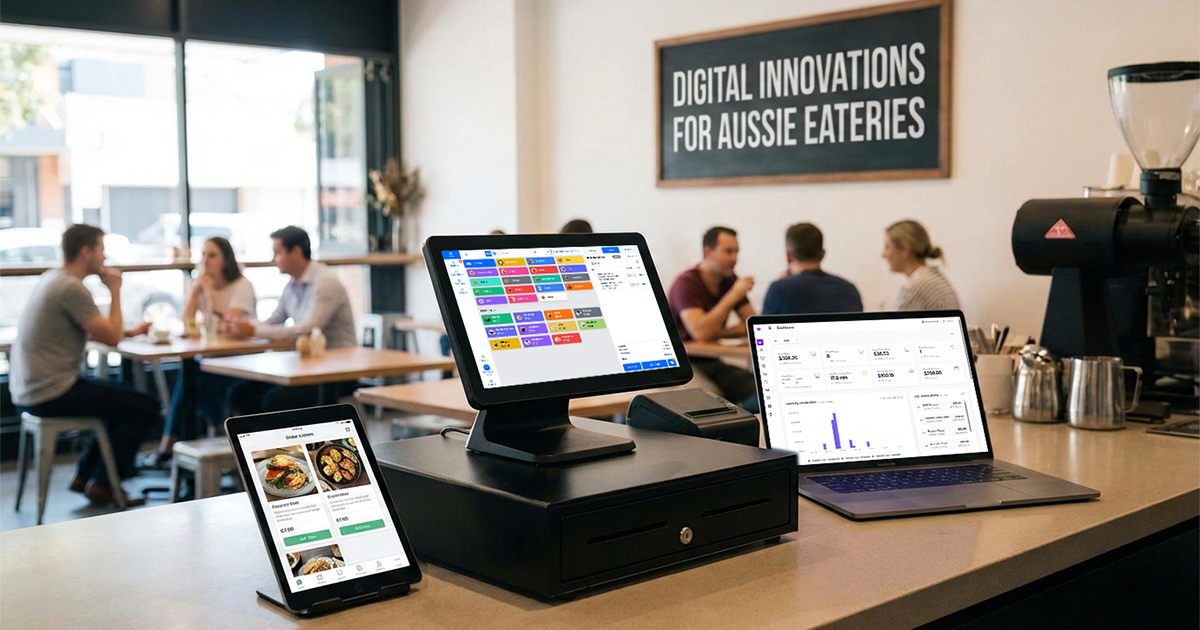
Online ordering has become a core revenue channel for Australian eateries. What started as a convenience has now evolved into an expectation, with customers wanting fast, accurate, and flexible ways to place orders — whether they’re dining in, picking up, or ordering delivery.
For restaurants, cafés, and takeaway venues, the real challenge isn’t offering online ordering — it’s integrating online ordering seamlessly with a restaurant POS system. When systems don’t communicate properly, inefficiencies arise, errors increase, and customer experience suffers.
This article explores how integrating an online ordering system with the right POS setup helps Australian eateries operate more efficiently, reduce manual work, and scale with confidence.
Why POS and Online Ordering Integration Matters
When online orders are managed separately from in-store orders, staff often have to manually re-enter data, increasing the risk of mistakes and delays.
A well-integrated restaurant POS system ensures:
- Online and in-store orders flow into one dashboard
- Menus, pricing, and availability stay consistent
- Orders reach the kitchen instantly
- Reporting reflects all sales channels accurately
For busy eateries, integration isn’t a “nice to have” — it’s essential.
What Does POS and Online Ordering Integration Mean?
Integration means your online ordering system connects directly to your POS, syncing key data in real time.
This typically includes:
- Menu items and modifiers
- Pricing and tax rules
- Order statuses
- Payment confirmations
- Inventory updates
Instead of managing multiple platforms, staff work from a single system — reducing complexity and improving speed.
Key Benefits of Integrated Online Ordering for Australian Eateries
1. Faster Order Processing
Orders placed online appear instantly in the POS and kitchen display, eliminating delays caused by manual entry.
2. Reduced Errors
Automatic order sync removes handwriting issues, miscommunication, and incorrect item entry.
3. Better Customer Experience
Accurate orders, realistic prep times, and consistent menus lead to happier customers and repeat business.
4. Centralised Reporting
Integrated systems provide a complete view of sales performance across dine-in, takeaway, and online channels.
Types of Online Ordering Integration
Australian eateries typically use one of the following integration approaches:
Direct POS-Based Online Ordering
The online ordering feature is built directly into the POS system.
Best for:
- Eateries wanting full control
- Businesses avoiding third-party commissions
Third-Party Online Ordering Integration
The POS connects with external ordering platforms.
Best for:
- Restaurants using multiple delivery channels
- Venues wanting broader online visibility
Hybrid Ordering Setups
A combination of in-house online ordering and third-party platforms, all syncing to one POS.
Best for:
- High-volume or growing eateries
Features to Look for in an Integrated POS System
Not all POS systems handle online ordering well. When evaluating options, Australian eateries should prioritise:
Real-Time Menu Sync
Ensures availability and pricing are always up to date across platforms.
Kitchen Workflow Integration
Orders should flow directly to kitchen screens or printers without staff intervention.
Payment Synchronisation
Online payments should reconcile automatically within the POS.
Scalability
The system should support increasing order volumes without performance issues.
Common Challenges Without Proper Integration
Eateries using disconnected systems often face:
- Duplicate order entry
- Missed or delayed online orders
- Inconsistent menu pricing
- Difficult sales reconciliation
- Increased staff workload
These issues not only affect efficiency but also damage customer trust.
How Integration Improves Operational Efficiency
A connected restaurant POS system allows eateries to streamline daily operations:
- Fewer staff required to manage orders
- Faster service during peak periods
- Improved kitchen coordination
- Accurate stock tracking across channels
For Australian eateries operating on tight margins, these efficiencies translate directly into cost savings.
Online Ordering and POS Integration for Growth
As consumer demand for digital ordering continues to rise, integrated systems provide a future-ready foundation.
They enable:
- Expansion into new locations
- Support for click-and-collect models
- Better data-driven decision-making
- Easier adoption of new ordering trends
An integrated approach ensures eateries can grow without operational chaos.
How to Choose the Right POS for Online Ordering Integration
Before selecting a POS, eateries should consider:
- Current order volume and peak demand
- Number of ordering channels
- Menu complexity
- Staff workflow
- Long-term business goals
The best restaurant POS systems support online ordering without adding unnecessary complexity.
Conclusion
Integrating an online ordering system with the right POS setup is no longer optional for Australian eateries — it’s a strategic necessity.
A well-integrated restaurant POS system improves accuracy, speeds up service, and provides a unified view of business performance. As online ordering continues to shape the hospitality landscape, eateries that invest in seamless integration will be better positioned to compete, adapt, and grow.